OET Speaking Fluency & Timing Control System Band A Strategy for Smooth Communication Under Pressure
INTRODUCTION
Fluency in OET Speaking is NOT about speaking fast.
It is about speaking:
Clearly + Calmly + Continuously + Structurally
Many candidates lose marks because they:
- Speak too fast under pressure
- Pause too much and lose flow
- Run out of time without structure
- Sound unnatural or robotic
This lesson teaches a complete Fluency & Timing Optimization System used by Band A candidates.
LEARNING OBJECTIVES
By the end of this lesson, you will be able to:
- Maintain natural speaking fluency under exam pressure
- Control speaking speed effectively
- Manage 5-minute role play timing
- Avoid pauses, confusion, and breakdowns
- Deliver structured answers within time limits
OVERVIEW: WHAT FLUENCY REALLY MEANS IN OET
Fluency is NOT:
- Fast speaking
- Long sentences
- Memorized speech
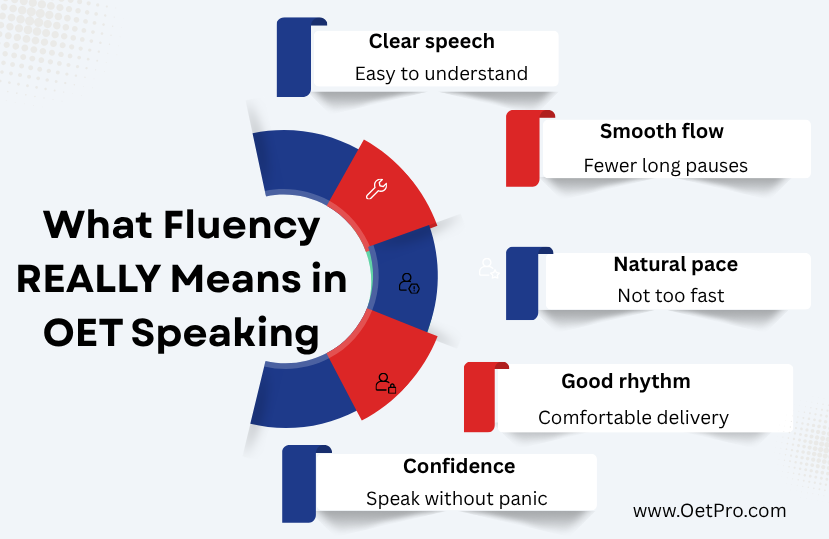
Fluency IS:
- Smooth communication flow
- Controlled pacing
- Clear structure delivery
- Natural interaction rhythm
Key Insight:
Fluency = Control + Clarity + Continuity
COMMON MISTAKES (FLUENCY BREAKDOWN POINTS)
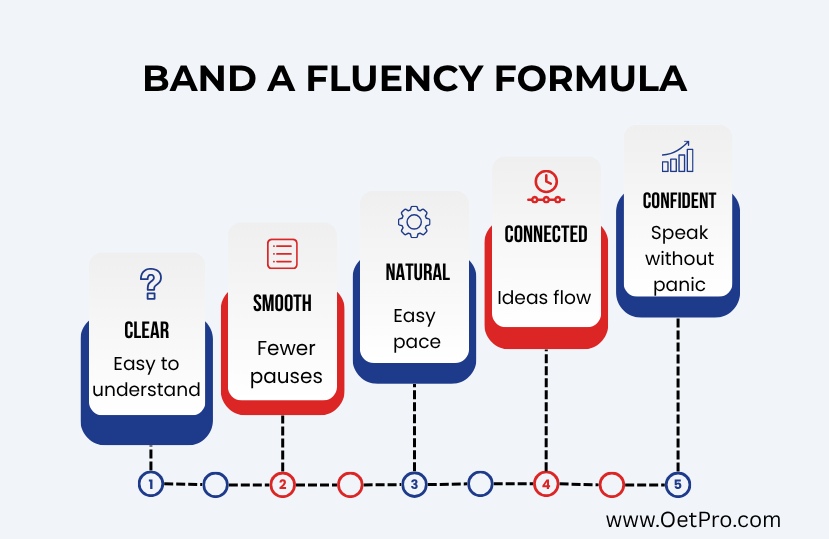
Mistake 1: Speaking too fast
Candidates rush due to anxiety.
Result:
- Loss of clarity
- Examiner difficulty understanding
Mistake 2: Long unnatural pauses
Thinking too much during conversation.
Result:
- Broken flow
- Loss of confidence perception
Mistake 3: Overloading sentences
Trying to say too much at once.
Result:
- Confusion
- Grammar breakdown
Mistake 4: No time awareness
Candidates exceed or misuse time.
Result:
- Incomplete role play
- Weak closure
CORE TEACHING FRAMEWORK
OET Fluency & Timing Control System
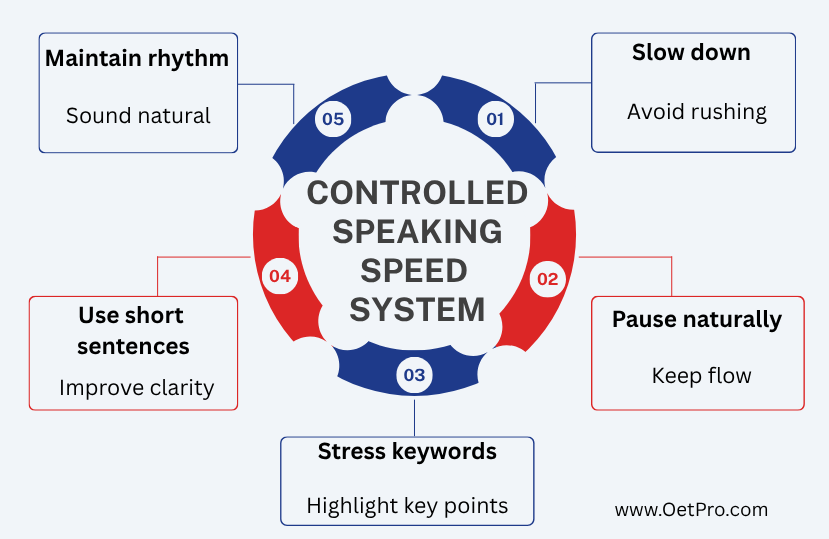
1. CONTROLLED SPEAKING SPEED SYSTEM
You must maintain balanced speaking speed.
Ideal Speed Rule:
- Not fast
- Not slow
- Controlled and steady
Technique:
- Speak like explaining to a patient in real hospital setting
- Pause naturally after key points
2. SENTENCE BREAKING SYSTEM
Do NOT use long sentences.
Instead:
Break ideas into short units.
Example:
Wrong:
“You need to take this medication regularly because otherwise your condition may get worse very quickly.”
Correct:
“You need to take this medication regularly.
Otherwise, your condition may worsen.”
Improves clarity + fluency
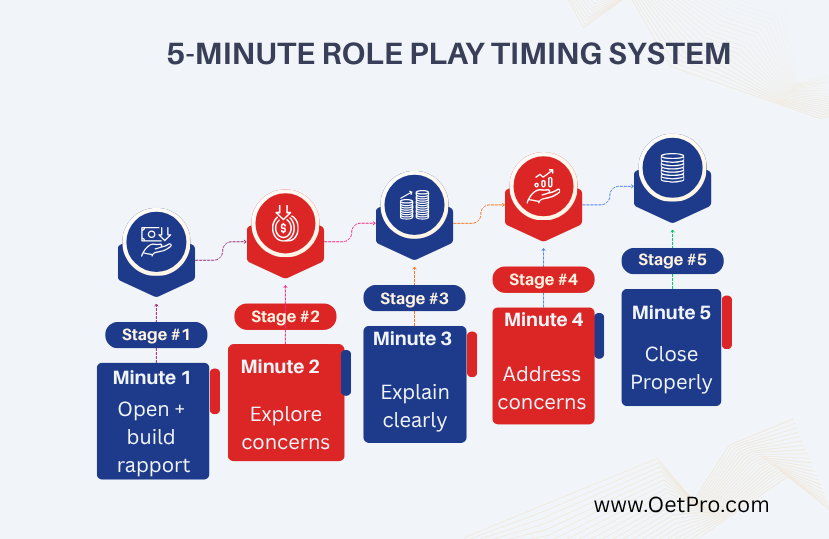
3. 5-MINUTE ROLE PLAY TIMING SYSTEM
Each role play must be managed strategically.
Time Distribution:
- Introduction -> 30–40 sec
- Questions -> 1.5–2 min
- Explanation -> 1.5–2 min
- Empathy -> continuous
- Closing -> 30–40 sec
This ensures complete coverage
4. FLOW MAINTENANCE SYSTEM
Fluency depends on uninterrupted flow.
Use linking phrases:
- “Now, let me explain…”
- “Based on that…”
- “Let’s go step by step…”
Prevents awkward pauses
5. PAUSE CONTROL TECHNIQUE
Pauses are NOT mistakes if controlled.
Allowed pauses:
- Before switching sections
- After patient response
- During empathy reflection
Avoid:
- Long silent gaps
- Searching for words repeatedly
6. PRESSURE MANAGEMENT SYSTEM
Under exam stress:
DO:
- Stick to structure
- Keep sentences short
- Stay calm and controlled
DON’T:
- Try to be perfect
- Overthink grammar
- Rush speaking
EXAMINER INSIGHT
Examiners observe:
- Natural flow
- Communication clarity
- Confidence under pressure
- Consistency of speaking rhythm
Fluency = perceived confidence
HIGH SCORER PROFILE (BAND A FLUENCY BEHAVIOR)
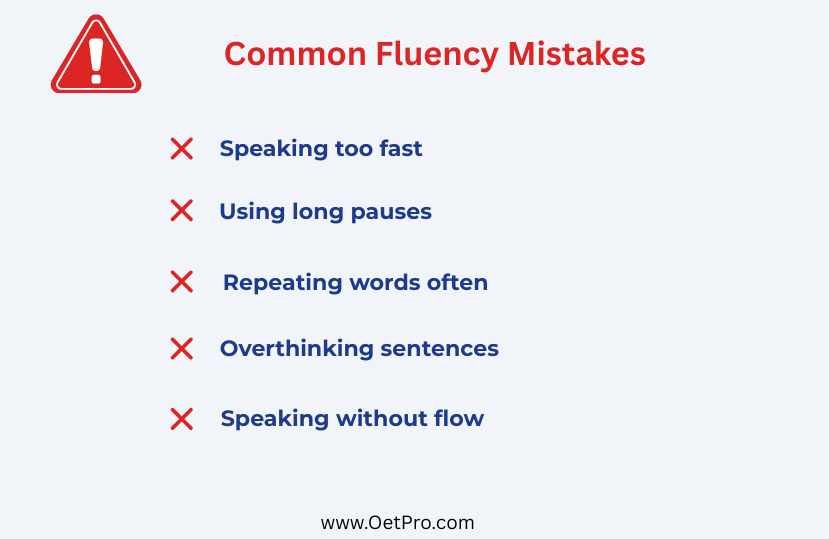
Band A candidates ALWAYS:
- Speak steadily and clearly
- Use structured short sentences
- Maintain natural rhythm
- Control timing without panic
- Stay calm throughout role play
They NEVER:
- Rush speech
- Freeze under pressure
- Lose structure due to time
CORE INSIGHT
Fluency is not speed it is controlled communication flow under pressure
SUMMARY
OET Speaking fluency depends on:
- Controlled speaking speed
- Structured sentence delivery
- Proper timing distribution
- Natural conversation flow
- Stress management techniques
FINAL CHECKLIST
Before exam, ensure:
- I can speak at controlled speed
- I use short structured sentences
- I manage 5-minute timing
- I avoid long pauses
- I maintain smooth flow